

CONTACT & SUPPORT
Have Questions? Contact Us.

Have questions about your materials testing equipment? We have the answers to these questions and much more right here! Check back monthly for long-form blog posts, how-to guides, and more. We’ll address industry insights, the operation and maintenance of specific equipment, and our product line recommendations, all designed to better serve you.
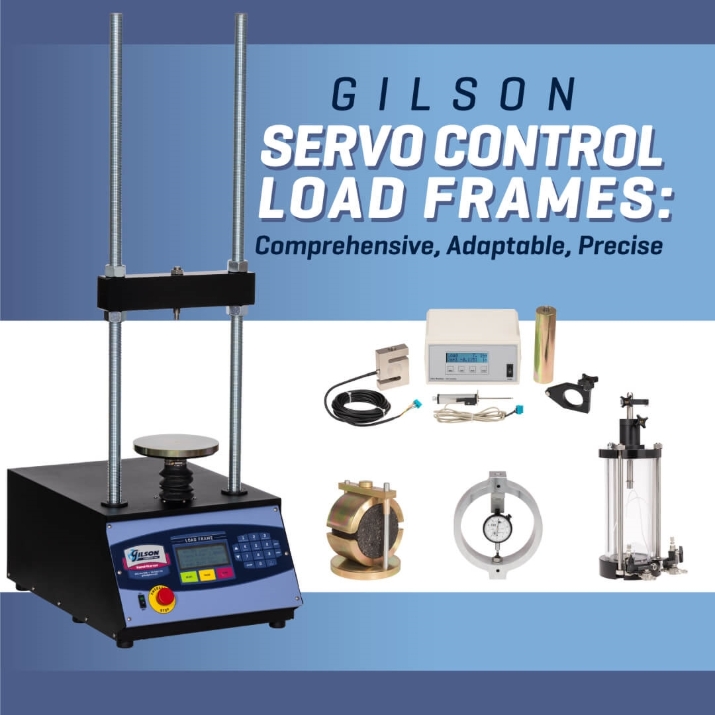
Laboratory load frames perform multiple test methods on a variety of soil, asphalt, and cement materials simply by changing prescribed components used for load and distance measurements. This blog post introduces Gilson's innovative Servo Control Load Frames and explores important considerations for selection of a suitable load frame and testing components for your applications.
Continue Reading Gilson Servo Control Load Frames: Comprehensive, Adaptable, Precise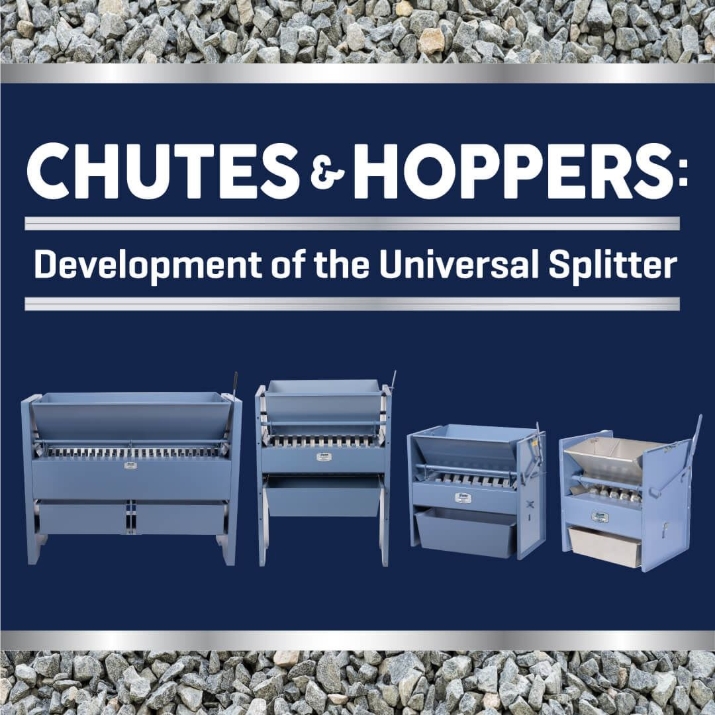
Riffle splitters were a popular tool in sampling and dividing, but had limitations, such as a narrow particle size range, uneven particle distribution, and poorly divided samples. To solve these issues, Gilson designed the Universal Splitter models with adjustable chute widths, a closed hopper to evenly distribute samples, and other features to produce more accurate and efficient sampling and dividing results.
Continue Reading Chutes & Hoppers: Development of the Gilson Universal Splitter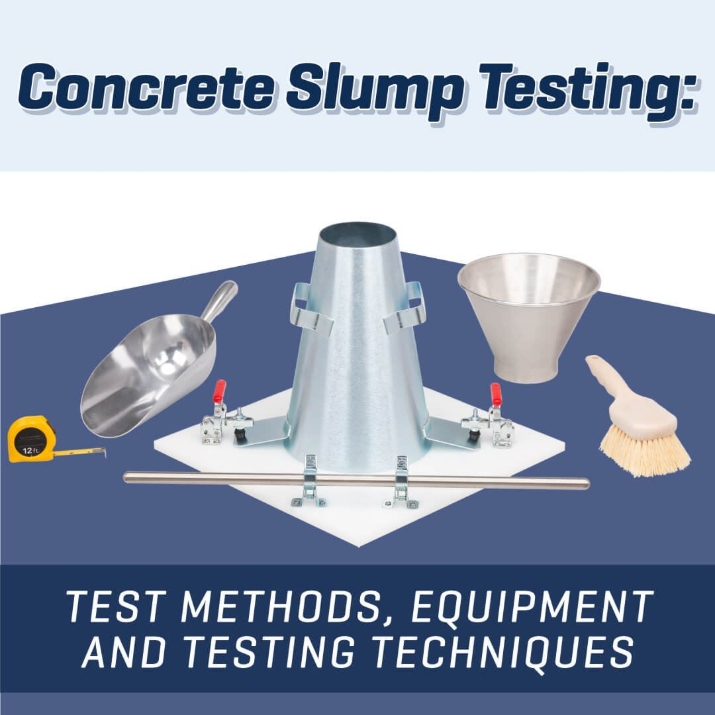
Concrete slump testing is the most common test performed on fresh concrete for any application. It is a significant factor when evaluating a concrete batch's compliance with the approved mix design and an eleventh-hour check of its suitability for placement. For this post, we focus on the slump test, how to perform it properly, and the best testing equipment to use.
Continue Reading Concrete Slump Testing: Test Methods, Equipment, and Testing Techniques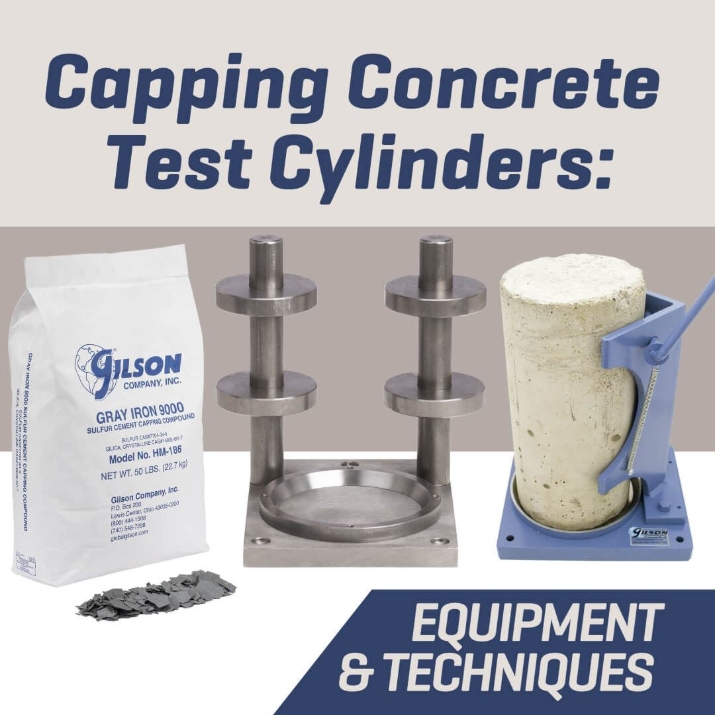
The two most popular types of end treatment for cylindrical concrete specimens are sulfur mortar capping and neoprene compression pads. Both have their advantages. Neoprene pads are convenient and reusable many times over. Sulfur mortar is economical when testing large numbers of cylinders, and is often the preferred end treatment for cylinders because of its long history of use. Reliable strength results and consistent display of fracture patterns are predictable and well understood. In this article, we go over the equipment and techniques used for sulfur mortar capping.
Continue Reading Sulfur Capping Concrete Test Cylinders: Equipment & Techniques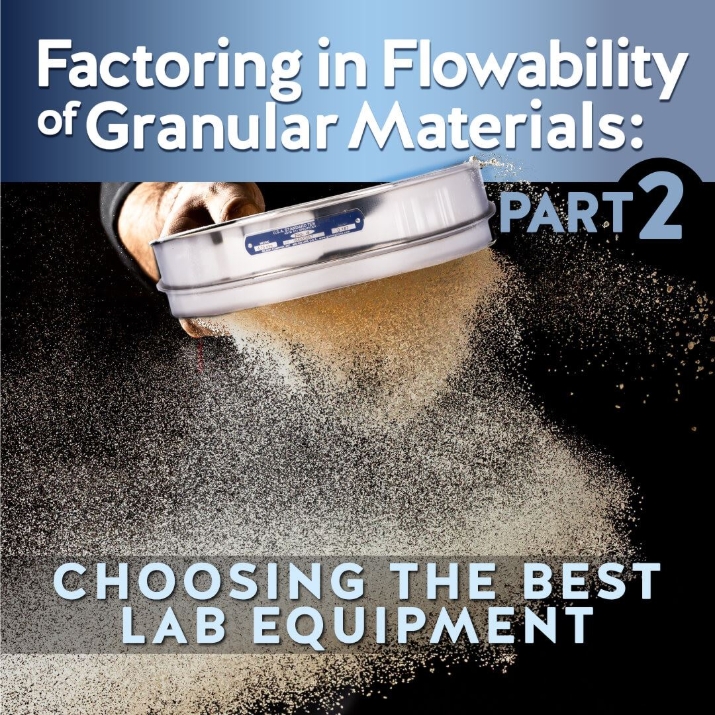
Test methods for dry granular materials must be built around the flowability of the material. No sampling, sizing, or handling method can be performed accurately or efficiently if it does not work in harmony with the material's flow properties.
Continue Reading Factoring in Flowability of Granular Materials: Sieving and Sizing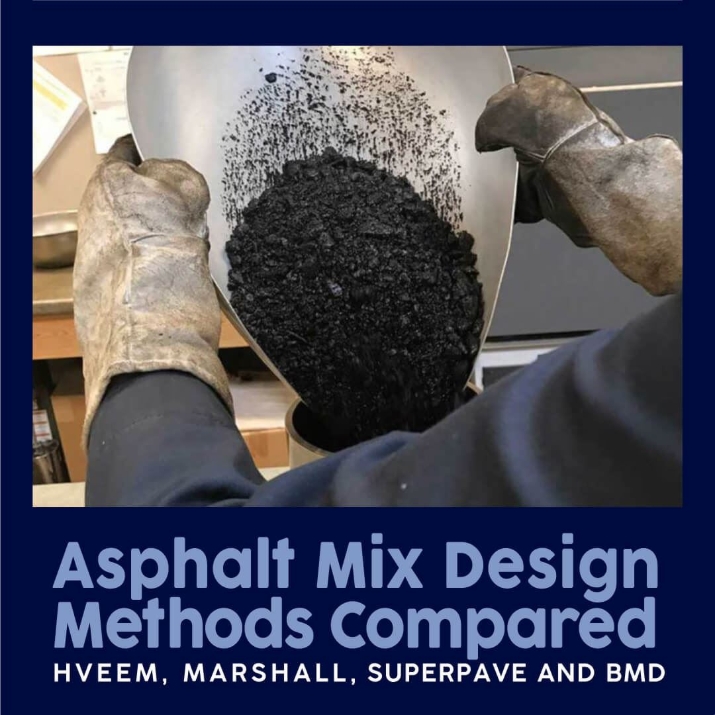
The list of essential ingredients for hot mix asphalt is exceedingly short for a composite material with such complex characteristics: asphaltic cement and mineral aggregates. Modern, flexible pavements with different mix designs are simply variations in the properties and ratios of the essential ingredients and adjustments to temperatures, handling, and placement methods. This article is an overview of past and present asphalt mix design methods and equipment, including Hveem, Marshall, Superpave, and Balanced Mix Design (BMD).
Continue Reading Asphalt Mix Design Methods Compared: Hveem, Marshall, Superpave, and BMD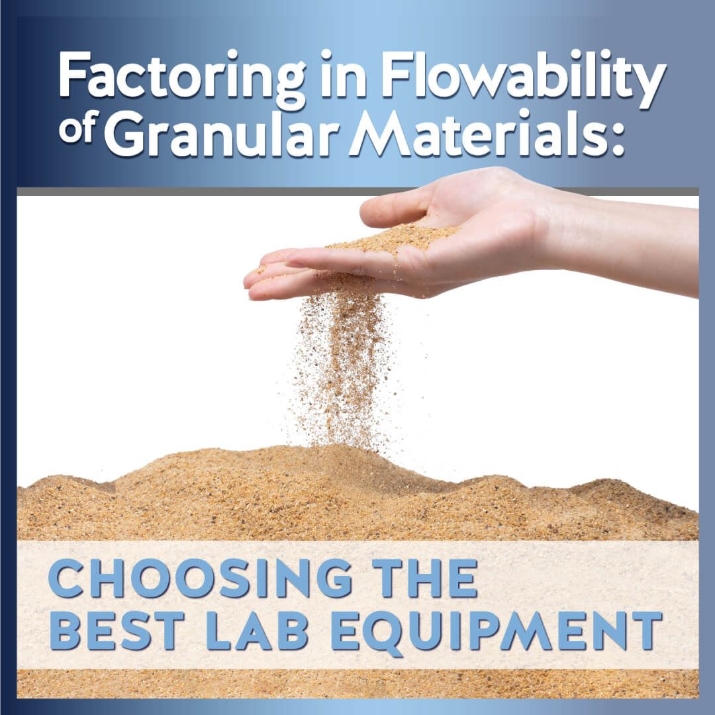
Every stage of sampling, dividing, and testing granular material is affected by its flow properties. Understanding a particular material and the unique factors that impact its flowability increases the efficiency and accuracy of your laboratory testing and can even help control your budget. In this article, we discuss what equipment is best suited for your testing application.
Continue Reading Factoring in Flowability of Granular Materials: Choosing the Best Lab Equipment
Particle sizing with test sieves is a hands-on process with many small, repetitive tasks that must be carried out properly. Selecting the right accessories for each job and using them correctly makes the work faster and easier, but it also significantly affects testing efficiency, accuracy, and repeatability. This article closely examines the tools that optimize test sieving procedures and ensure your sieves meet the requirements of standard test methods.
Continue Reading Sieving and Screening Accessories for Better Testing
Construction aggregates are traditionally mined or extracted from natural sand and gravel deposits or geological rock formations, then further crushed and sorted into size fractions for blending. In this blog article, we discuss the tests and equipment to determine the characterization of aggregate shape properties for roads and structures.
Continue Reading Aggregate Shape and Texture, Tests and Testing Equipment


