

CONTACT & SUPPORT
Have Questions? Contact Us.

Have questions about your materials testing equipment? We have the answers to these questions and much more right here! Check back monthly for long-form blog posts, how-to guides, and more. We’ll address industry insights, the operation and maintenance of specific equipment, and our product line recommendations, all designed to better serve you.
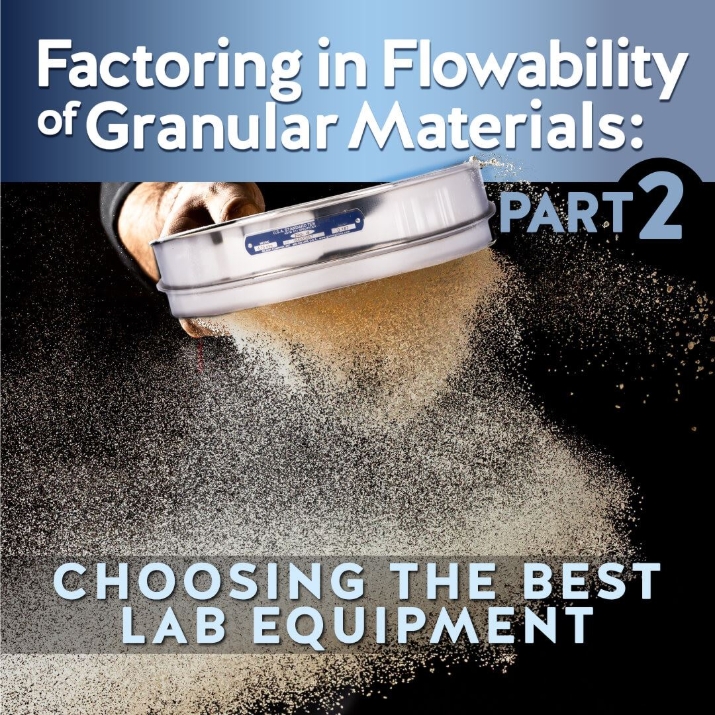
Test methods for dry granular materials must be built around the flowability of the material. No sampling, sizing, or handling method can be performed accurately or efficiently if it does not work in harmony with the material's flow properties.
Continue Reading Factoring in Flowability of Granular Materials: Sieving and Sizing
Test sieves are simple devices, but they are still scientific instruments and the most cost-effective and widely used particle sizing and gradation testing method. This blog article will cover the accuracy verification of sieves, agitation and sieve shakers, accessories, and wet-wash sieves.
Continue Reading Laboratory Test Sieves: What You Should Know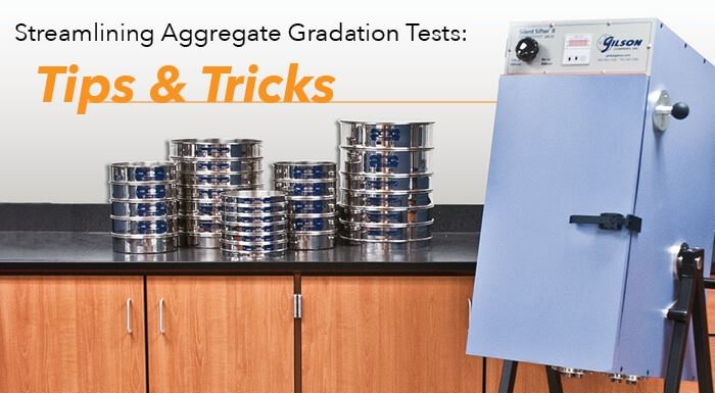
Sieving for particle size distribution is the primary test requested for construction aggregate samples. Whether field samples are being tested to evaluate a new aggregate source or just coming in as part of day-to-day quality control of production, particle size distribution is a primary consideration. If processing and sieving is not handled efficiently, it creates a backlog.
Continue Reading Streamlining Aggregate Gradation Tests: Tips and Tricks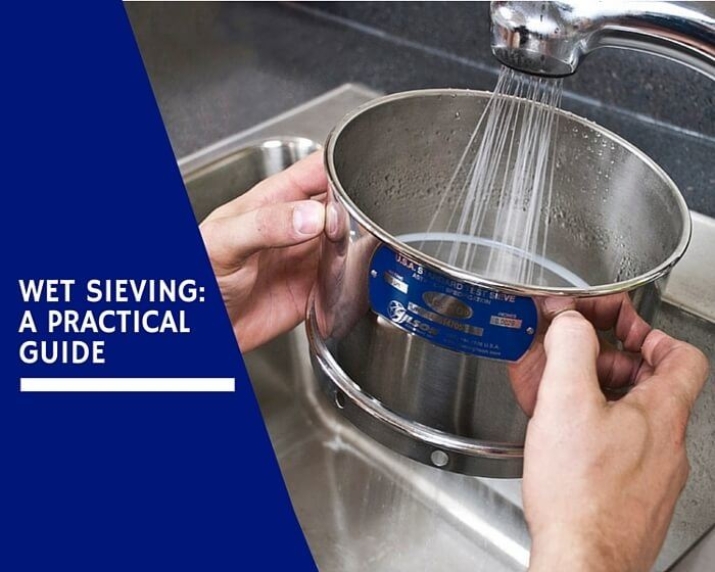
When dry sieving isn't sufficient for producing an acceptable degree of separation between individual fractions of a sample, it's time to try wet sieving. This blog post covers the importance of wet sieving, when it is best used, and recommended equipment for various procedures.
Continue Reading Wet Sieving: A Practical Guide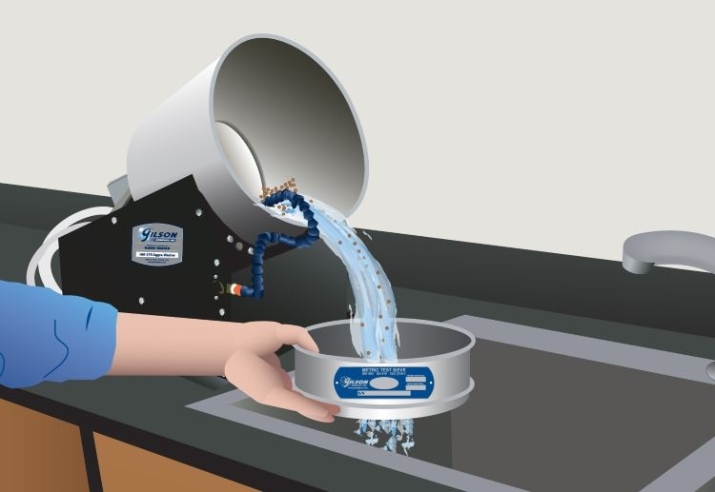
Gilson Automatic Aggregate Washers efficiently wash fines out of aggregate and soil samples for sample preparation or determination of fines fractions.
Continue Reading How to Optimize Fines Content Determinations


